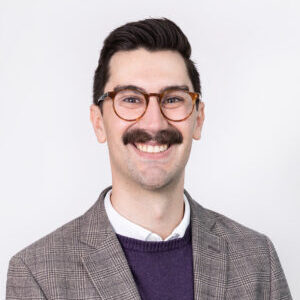
My name is Aaron Bailey, and I am a doctoral student in the Social Dimensions of Health program within the University of Victoria’s School of Public Health and Social Policy. I come from a white settler family located on the traditional territories of the Mississaugas of Scugog Island First Nation and currently live on the unceded territories of the Lək̓ ʷəŋən and W̱ SÁNEĆ people. Before returning to graduate studies, I supported the daily operations and advocacy activities of the Vancouver Area Network of Drug Users, Eastside Illicit Drinkers Group for Education, and Surrey Union of Drug Users as an allied staff person. I also licensed as an Emergency Medical Responder after stepping away from frontline work and am working to enter practice as a paramedic. My commitments to these relations and understanding of health research as an empowerment practice guide my work. As a new scholar, I bring together historical drug policy analysis informed by understandings of public health coloniality with participatory research-as-organizing from within British Columbia’s movement for drug user liberation. I spend my free time taking care of my guinea pigs, volunteering with St John Ambulance, playing baseball, and organizing with a street medic collective in so-called Vancouver.
Drug User-Centered Historicization of Involuntary Substance Use Treatment in British Columbia
BC has implemented involuntary treatment for People who Use Drugs (PWUD) (BC Gov, 2024). This adaptation of BCs substance use care system has been criticized as unsupported by public health evidence and reflective of colonial, carceral logics which reproduce inequitable drug policy in Canada (Cooley et al., 2023; Bahji et al., 2023). Crucially, the policy overlooks the stated demands of people with lived experience of substance use. PWUD have argued that secure care perpetuates health inequities and rights abuses experienced by structurally marginalized people by facilitating care avoidance, increased risk of drug poisoning, and criminalization (Werb et al., 2016; Goodyear et al., 2021). While archival findings illustrate involuntary care for People Who Use Drugs (PWUD) was debated in BC throughout the 1960s, 1970s, 1980s, and 2020s, the genealogy of secure care in BC has not been subject to historical study or mobilized to inform health system responses to BCs drug toxicity crisis. Furthermore, frameworks for policy analysis and medical history provide no guidance for the systematic, community-engaged historical study of health or drug policy. This dissertation will therefore explore the following research questions:
- What sociopolitical conditions have influenced the repeated emergence of involuntary treatment proposals for PWUD in BC after 1945, and;
- how might a drug user-centred policy history of secure care inform novel methodologies for equity-oriented health systems research in BC?”
I aim to situate a historical policy analysis of secure care in BC within a four-year participatory study of drug policymaking processes surrounding involuntary treatment, safe supply, and decriminalization of personal possession of specific substances in BC designed by Dr’s Bernie Pauly and Karen Urbanoski at the Canadian Institute for Substance Use Research. This dissertation would be the first scholarly work to historicize involuntary care for people who drugs in within Canada as well as the first systematic study of Canadian drug policy history to employ participatory archival methods alongside PWUD. By applying a “research-as-organizing” methodology (Baker et al., 2025), the project team will circulate policy learnings directly to partnered drug user-led organizations and build capacity for community partners to engage in historical research.